
Why Are Ants Suddenly Everywhere? What We're Seeing in Placer County
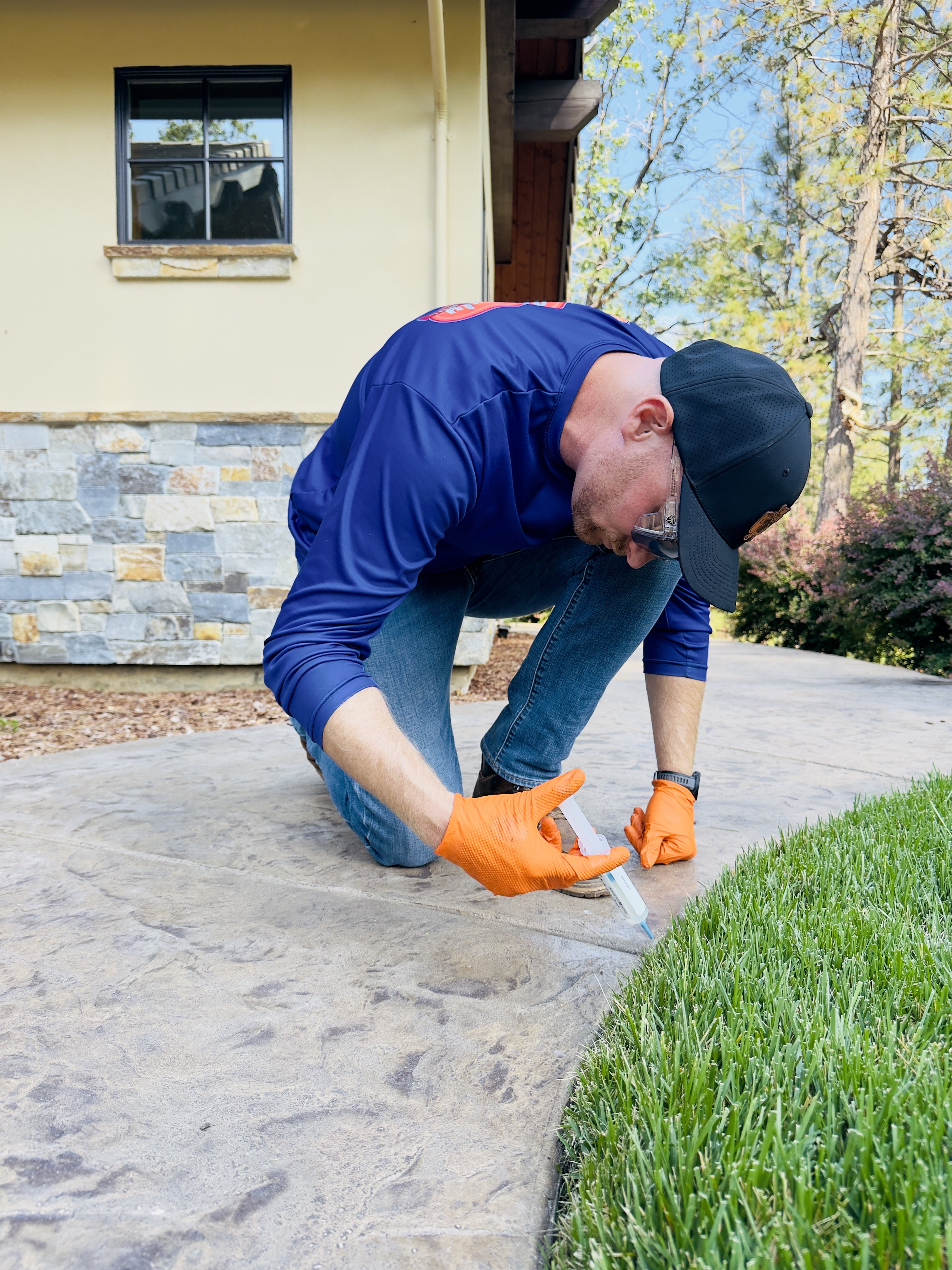
Over the last couple of weeks we've had a small amount of rain in Placer County, followed by warmer weather, and ant calls have picked up because of it. This isn't unusual, but it's worth explaining what's actually happening, because a lot of homeowners assume ants just showed up out of nowhere, or that spraying what they see should be enough to fix it.
Neither of those is quite right. Here's what's actually changing when ant activity increases, why spraying a visible trail can sometimes make things look worse before they get better, and what we'd actually recommend depending on what you're dealing with.
Why Ant Activity Can Suddenly Increase
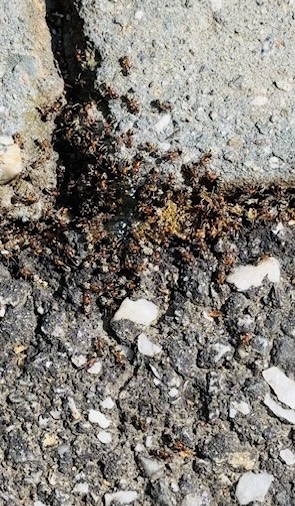
Ant colonies near a home are usually there well before anyone notices them. What changes is foraging — where worker ants travel looking for food and moisture, and how visible that travel becomes around the house.
A handful of things can shift foraging patterns: moisture in the soil after even a small amount of rain, warming temperatures that get ants moving again, irrigation cycles, changes in what's blooming or producing sap in the landscaping, and general shifts in ground conditions as the seasons turn. None of these things "cause" ants on their own. They just change where an already-established colony is sending workers, and sometimes that route runs straight toward a foundation, a door, or a kitchen window.
Landscaping plays a role here too. Aphid-producing plants — crape myrtles and Japanese maples are common ones on suburban properties, along with oaks on more wooded lots — produce honeydew that ants forage on, which keeps colonies active and well-fed close to the house. Irrigated planter beds and foundation plantings do something similar by keeping soil consistently moist, which some ant species key in on.
Suburban, irrigated properties and foothill properties don't look quite the same in this regard. A suburban yard with consistent irrigation and ornamental plantings can keep ants active close to the house for much of the year, while a foothill property with oaks, natural ground cover, and less consistent watering tends to see activity shift more with the seasons. Either way, the ants are usually working a route between landscaping and the structure — it's just that the route looks a little different depending on the property.
So when a homeowner tells us ants "just started" this week, what we're usually looking at is a colony that's been established nearby for a while, with conditions recently changing enough to make its foraging more noticeable.
Why Am I Seeing Ants After It Rains?
A little rain doesn't cause an ant infestation by itself. What it does is change soil moisture and ground conditions enough to shift how and where ants forage. Some species move activity toward drier ground when soil gets saturated; others become more active once things dry back out and temperatures climb again — part of why activity often ramps up in the days after a light rain followed by warmer weather, which is the exact pattern we've been seeing recently around Placer County.
The colony itself doesn't disappear or reappear with the weather. It's the same ants, adjusting where they travel based on conditions. That's useful to know, because it means the fix isn't waiting for the ground to dry out — it's understanding where the colony actually is and what's drawing workers toward the house right now.
Why Are My Ants Getting Worse Even Though I'm Spraying Them?
This is probably the most common frustration we hear. Someone sprays the ants they can see on the counter or along a windowsill, the trail disappears for a day or two, and then it's back — sometimes in a different spot.
Spraying visible ants kills the ants that are visible. It doesn't do anything about the colony they came from, which is usually somewhere outside — under a planter bed, along a foundation, inside a retaining wall, or near a tree. Repellent sprays can also do something counterproductive: they disrupt the trail and scatter workers, and for certain ant species, that kind of disruption can contribute to the colony budding, or splitting into satellite colonies, rather than settling back down. That doesn't happen every time someone reaches for a can of spray, and it depends on the species and how the colony's been treated — but it's a real enough pattern that we don't treat repellent sprays as a real fix for an established colony.
What we'd rather do is figure out where the ants are actually coming from and, where it makes sense, use non-repellent products or baits that ants carry back to the colony themselves. That takes a closer look than grabbing a can of spray, but it's addressing the actual source instead of just the ants standing in front of you at the moment.
Will Windex or Ammonia Kill Ants?
We get this one a lot. Household cleaners like Windex or ammonia-based products can kill ants they directly contact, and they can temporarily wipe out or disrupt the pheromone trail ants use to follow each other back and forth. That's why it can look like it worked — the trail you were watching disappears for a while.
What it doesn't do is reach the colony. New workers will usually pick up a new route once the old trail's scent is gone, and you're back where you started. We wouldn't rely on Windex or ammonia as an actual treatment for an established ant problem, and we wouldn't recommend mixing cleaning products together to try to make something stronger — that's a real safety risk and not worth it for what amounts to a temporary fix.
What's the Best Ant Killer I Can Buy at the Store?
For most of the common household ants we see trailing through kitchens and bathrooms in Placer County, a properly placed bait generally does more than repeatedly spraying the trail. Terro is one we've seen homeowners have decent success with — it's widely available and ants tend to take to it.
Placement matters more than the product. Bait needs to sit along an actual trail, not just somewhere convenient, and it needs to be left alone long enough for ants to feed and carry it back. That leads into something people often get wrong, which we'll cover next.
It's also worth saying plainly: there isn't one store-bought product that solves every ant situation. Different species respond differently, some colonies are simply too established for a consumer product to reach, and what works on a small kitchen trail isn't necessarily going to touch a colony that's been building outside for a season or more.
Why Do I Sometimes See MORE Ants Around Ant Bait?
This throws people off more than almost anything else. You put out bait, and suddenly there are more ants around it than you were seeing before — so it looks like the problem's getting worse.
It's usually the opposite. Ants recruit. When a worker finds a good food source, it lays a scent trail back to the colony and recruits other workers to come feed. A pile of ants on bait is often just that recruitment happening in front of you, not a sign the colony is growing or that treatment failed.
The hard part for a lot of homeowners is resisting the urge to spray the ants gathered on the bait. The goal isn't to immediately kill every ant standing at the bait — it's to let them feed and carry material back to the colony, where it can actually reach the queen and the rest of the workers. Spraying the bait pile defeats the purpose and can just push activity somewhere else.
When Should I Call Pest Control for Ants?
Seeing an ant or two doesn't automatically mean you need pest control. Ants are a normal part of living in Placer County, and plenty of minor activity resolves on its own or with a well-placed bait.
It's worth having someone take a closer look when:
- Activity keeps coming back after you've tried treating it yourself
- Trails disappear and then show up again somewhere else in the house
- Ants are consistently getting inside, not just showing up outside
- There's noticeable activity around landscaping, trees, foundations, or irrigation areas
- You can't tell where the ants are actually coming from
- DIY sprays only seem to help for a day or two before activity returns
- The situation feels bigger than one trail — possibly more than one colony involved
None of these on their own mean something's seriously wrong. They're just the kind of pattern that usually means there's more going on than a can of spray or a single bait station can reach, and that's when an inspection starts to make more sense than guessing.
Our ant control service starts with figuring out where the colony actually is, not just treating whatever trail is currently visible.
Frequently Asked Questions
Why are ants suddenly coming into my house?
Usually because a colony that was already established nearby has shifted its foraging toward your house. Changes in moisture, temperature, irrigation, or landscaping conditions can all affect where ants travel, even though the colony itself has been there for a while.
Why do ants get worse after rain?
A little rain doesn't cause an infestation on its own. It changes soil moisture and ground conditions enough to shift where an existing colony forages, which can make activity around the house more noticeable, especially once temperatures warm back up afterward.
Why are ants getting worse even though I'm spraying them?
Spraying kills the ants you can see, but it doesn't reach the colony they're coming from. Repeatedly spraying a visible trail can also disrupt ant behavior, and for some species may contribute to a colony splitting into smaller satellite colonies rather than solving the problem.
Does Windex kill ants?
It can kill ants it directly contacts and temporarily disrupt the pheromone trail they follow, which is why a trail might disappear for a bit. It doesn't reach the colony, so it isn't a reliable way to solve an established ant problem.
Does ammonia get rid of ants?
Similar to Windex, ammonia can kill ants on contact and disrupt a trail temporarily, but it doesn't address the colony itself. We wouldn't recommend it as a real fix, and we wouldn't recommend mixing it with other cleaning products.
What is the best ant killer from the store?
For common household ants, a properly placed bait generally works better than repeatedly spraying a visible trail. Terro is one homeowners have had reasonable success with, but placement matters more than the specific product, and different ant species and situations can respond differently.
Why are there more ants around my ant bait?
That's usually ants recruiting other workers to a good food source, not a sign the problem is getting worse. Heavy activity on bait can actually mean it's working.
Should I spray ants that are eating bait?
No. The goal is to let them feed and carry the bait back to the colony, where it can reach the queen and other workers. Spraying the ants on the bait defeats the purpose and can just scatter activity elsewhere.
When should I call pest control for ants?
When activity keeps returning after DIY treatment, trails keep reappearing in new spots, ants are consistently getting inside, or you can't tell where they're actually coming from. Occasional ants don't automatically mean you need professional help — it's more about whether the pattern suggests a larger colony or an environmental issue worth investigating.
How does professional ant control work?
It starts with figuring out where the colony actually is, not just treating the trail you can see. From there, we use the products and placement that make sense for the species and the property, often including non-repellent treatments or baiting that ants carry back to the colony themselves.
If you're seeing more ant activity around your Placer County home right now, you're not imagining it — a little rain followed by warmer weather is a pattern that tends to bring existing colonies more into view. Our ant control service starts with figuring out where that colony actually is, whether that's a planter bed, a foundation line, or a tree like the oaks we cover in why Auburn homes get ants from oak trees. We see this pattern regularly around Auburn's oak-covered foothill properties and just as often on irrigated suburban lots around Roseville — the landscaping looks different, but the underlying pattern is usually the same.
For more on why ants suddenly show up inside the house, we've also written about why homes in Auburn and the surrounding foothills see this so often.








.jpeg)