
I Found Signs of Rodents in My House. Now What?
Short answer: If you’ve found droppings or other signs of rats or mice in your house, note exactly where you found them, clean up safely (don’t sweep or vacuum droppings), and put away easy food sources. Don’t rush to seal every hole you see. The next step is an investigation: figure out what you’re dealing with, follow the clues to the areas where activity is showing up, look closely at likely access points like plumbing penetrations, correct any openings with material rats and mice can’t chew through, account for the chance that one is still inside, and keep watching what happens next.
Finding evidence is the start of that investigation, not the answer. Below is a real example from one of our customers, and what each step can teach you if you’re looking at droppings in your own home and wondering what to do.
What Should I Do Right After Finding Signs of Rats or Mice?
The first day or two is less about getting rid of anything and more about not making the problem harder to read.
- Note every spot. A quick photo of each location gives you, or whoever inspects, a map of where activity is showing up. Once it’s cleaned, that information is gone.
- Don’t sweep or vacuum droppings. The CDC advises against sweeping or vacuuming rodent droppings, urine, or nesting material because it can stir particles into the air. Their guidance is to air the space out for about 30 minutes, wear rubber or plastic gloves, spray the area with a disinfectant or a bleach solution (about 1 part bleach to 9 parts water), let it soak for about five minutes, and wipe it up with paper towels. The full steps are on the CDC’s rodent cleanup page.
- Put away easy food sources. Pet food, birdseed, and open bags of anything are common draws. Move them into sealed, hard-sided containers.
- Skip loose bait indoors. Poison scattered inside a home creates its own risks for kids and pets, and an animal that dies inside a wall is a problem of its own.
- Don’t seal everything yet. If a rat or mouse is still inside, closing its way out can make things harder. We’ll come back to this, because it played a real part in the job below.
One Clue Doesn’t Always Tell the Whole Story
This happened at a home we service in Meadow Vista. The customer was already on regular general pest service with us, and we treat every regular visit as a chance to pay attention to what’s happening around the property, not just the pest we came to treat.
During one of those visits, we noticed rodent droppings outside near the customer’s deck, along the same general side of the home as the kitchen. We photographed the droppings, added the photo to the customer’s service record so they could see it after the visit, and let them know what we’d found.
At that point, the evidence was outside. We weren’t telling the customer that rats or mice were already in the house. Activity outside a home is common and doesn’t automatically mean anything is getting in. We cover that question in more depth in whether seeing rats outside means they’re inside your house.
A few weeks later, the customer called. They had found signs of rodent activity inside the house, including in a closet area, and asked us to come inspect and figure out what was going on.
That new information changed the picture. On its own, the outdoor evidence was just something to document and keep an eye on. Combined with evidence inside, it justified a more focused inspection.
Start by Figuring Out What You’re Dealing With
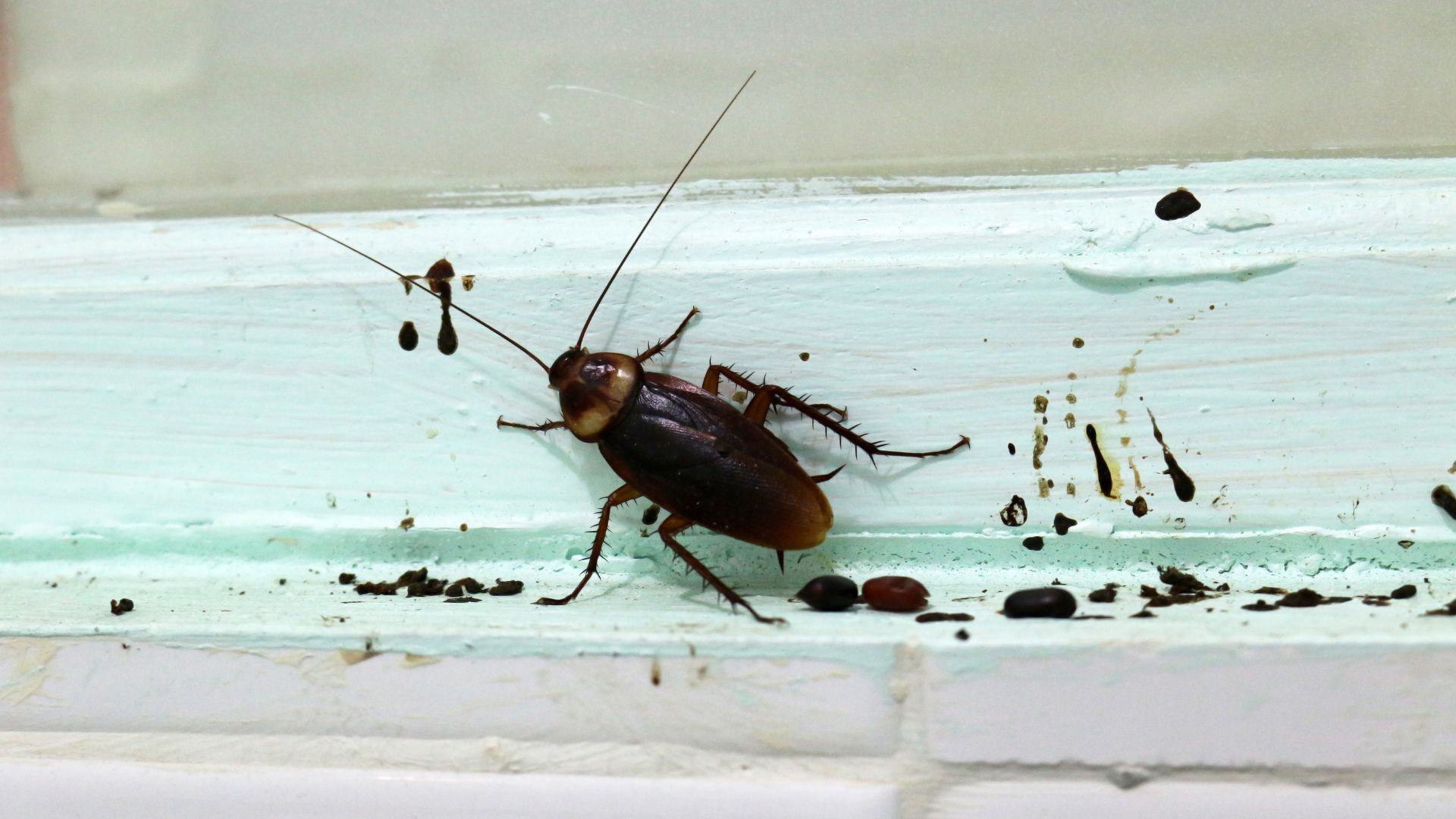
Rats and mice can use different-sized openings, respond to traps differently, and tend to travel and nest in different places, so it helps to know which one you have before deciding what to do. Droppings are usually the best starting clue, along with gnaw marks and where the activity shows up. Our guide on how to tell mice from rats by their droppings and other signs walks through the differences.
Following the Clues Inside the House
When we arrived, we didn’t start by setting traps. We started by following the clues.
We inspected the laundry room because it was within the same general area of the house we were investigating. We also checked underneath the kitchen sink. Plumbing penetrations, the places where pipes pass through walls, floors, and cabinets, are one of the areas we commonly inspect when we’re looking for how rats or mice may be getting around. A gap around a pipe is easy to miss, and it sits in a dark, quiet spot most people rarely look at closely.
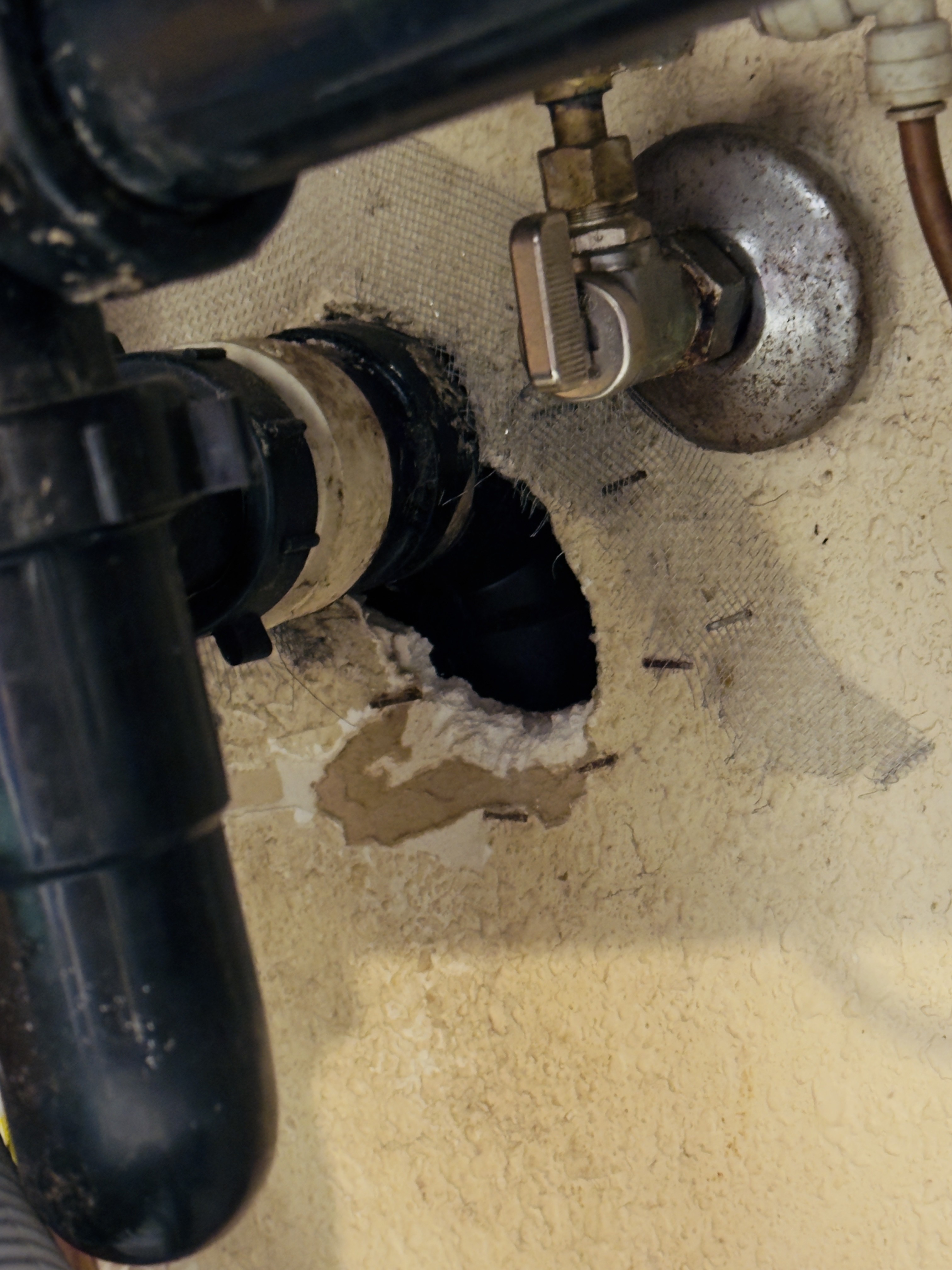
Behind the kitchen sink drain pipe, we found that a rodent had chewed through the sheetrock around the plumbing penetration.
It’s also worth noting where we’d seen evidence weeks earlier: outside, along the same general side of the home as the kitchen. That alone didn’t prove anything. But it’s the kind of detail that helps decide where to look, and it’s a good example of why documenting what you see, even when it seems minor, can pay off later.
Why the Old Repair Didn’t Hold
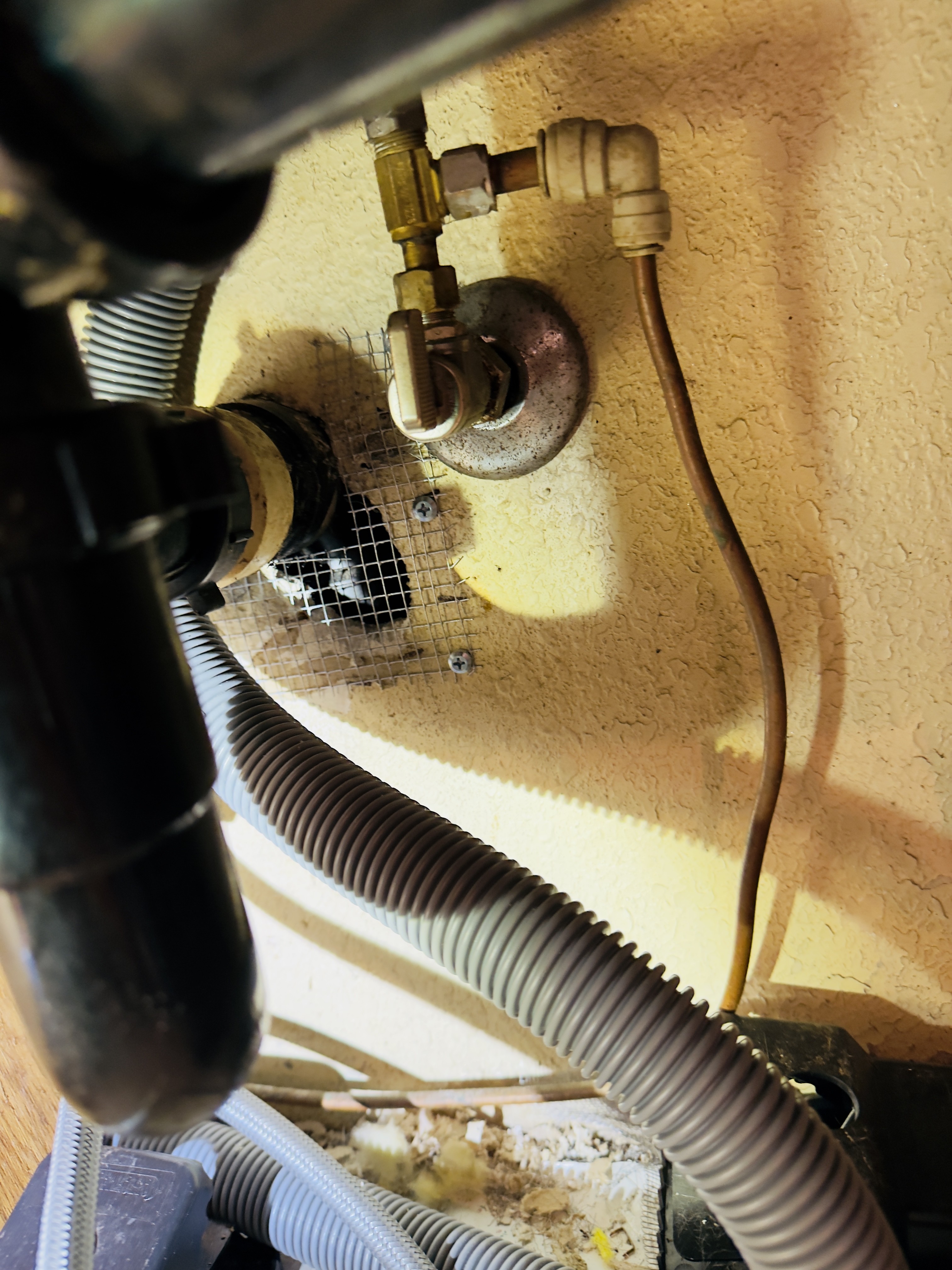
The opening behind the drain pipe looked like it had been repaired or sealed at some point before. The problem was the material. Whatever had been used wasn’t enough to stop a rodent from chewing right back through it.
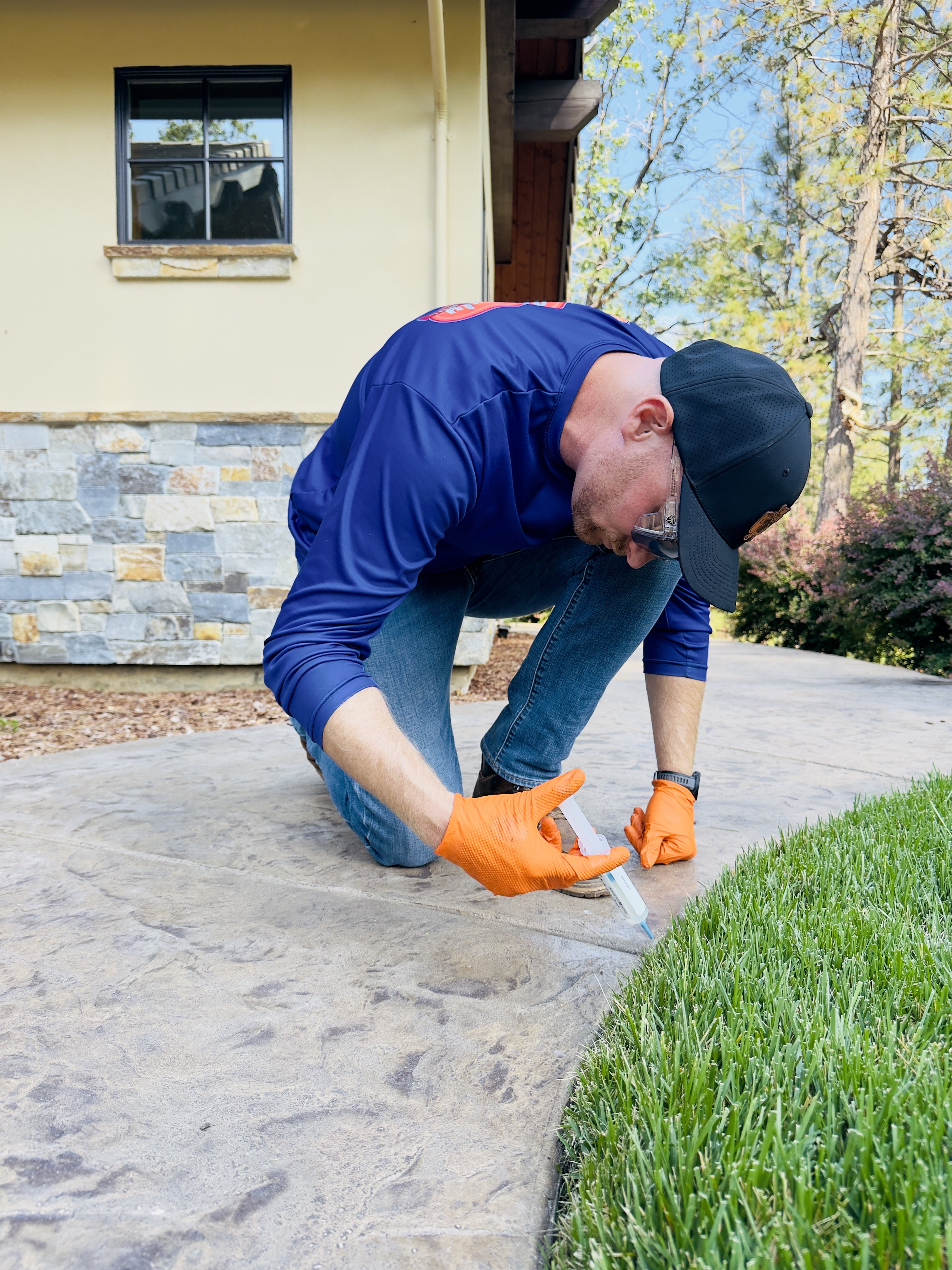
That’s common. Rats and mice gnaw constantly, and soft materials like foam, caulk, or a thin patch may close a gap without actually keeping anything out. We corrected the opening with 1/4-inch metal hardware cloth, which is tough enough that chewing through it isn’t practical and can be cut and fitted around a pipe. UC IPM recommends sealing holes larger than 1/4 inch to keep out both rats and mice, and warns against lightweight chicken wire, which rats can get through. You can read more in the UC IPM Pest Notes on rats.
The lesson for homeowners: if an opening has been “fixed” before and activity came back, the repair material is worth a second look.
Should You Seal a Hole If a Rat or Mouse Might Still Be Inside?
This is one of the most useful lessons from this job.
Securing the opening was the right move. But we didn’t want to assume that closing it meant the problem was finished. There was a chance a rodent was still inside the living space when the opening was secured.
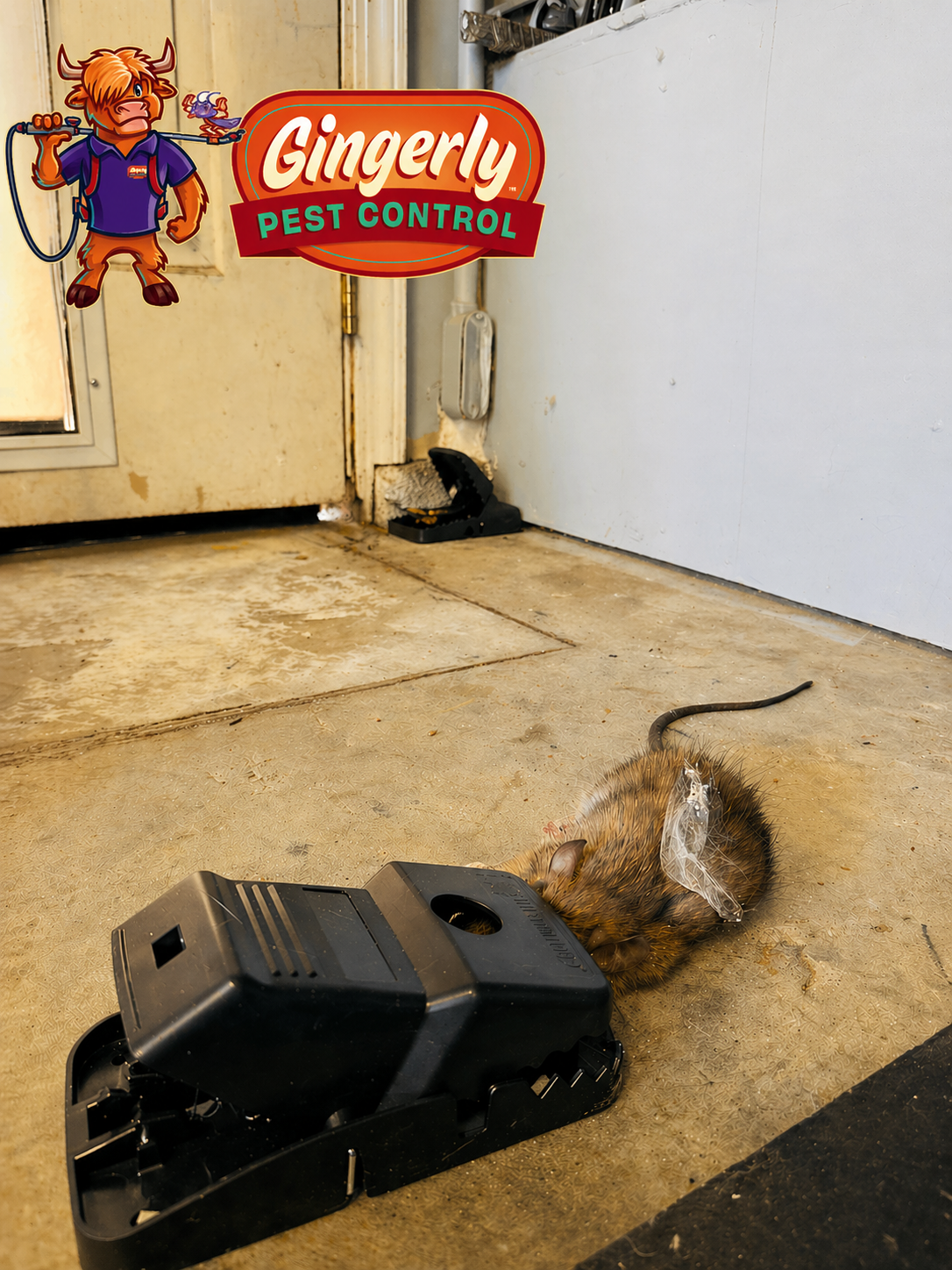
So during that same visit, along with securing the opening, we placed two traps inside as a precaution. If a rodent had been sealed in and tried to return to that area, its old way in and out, the traps gave us a chance to catch it.
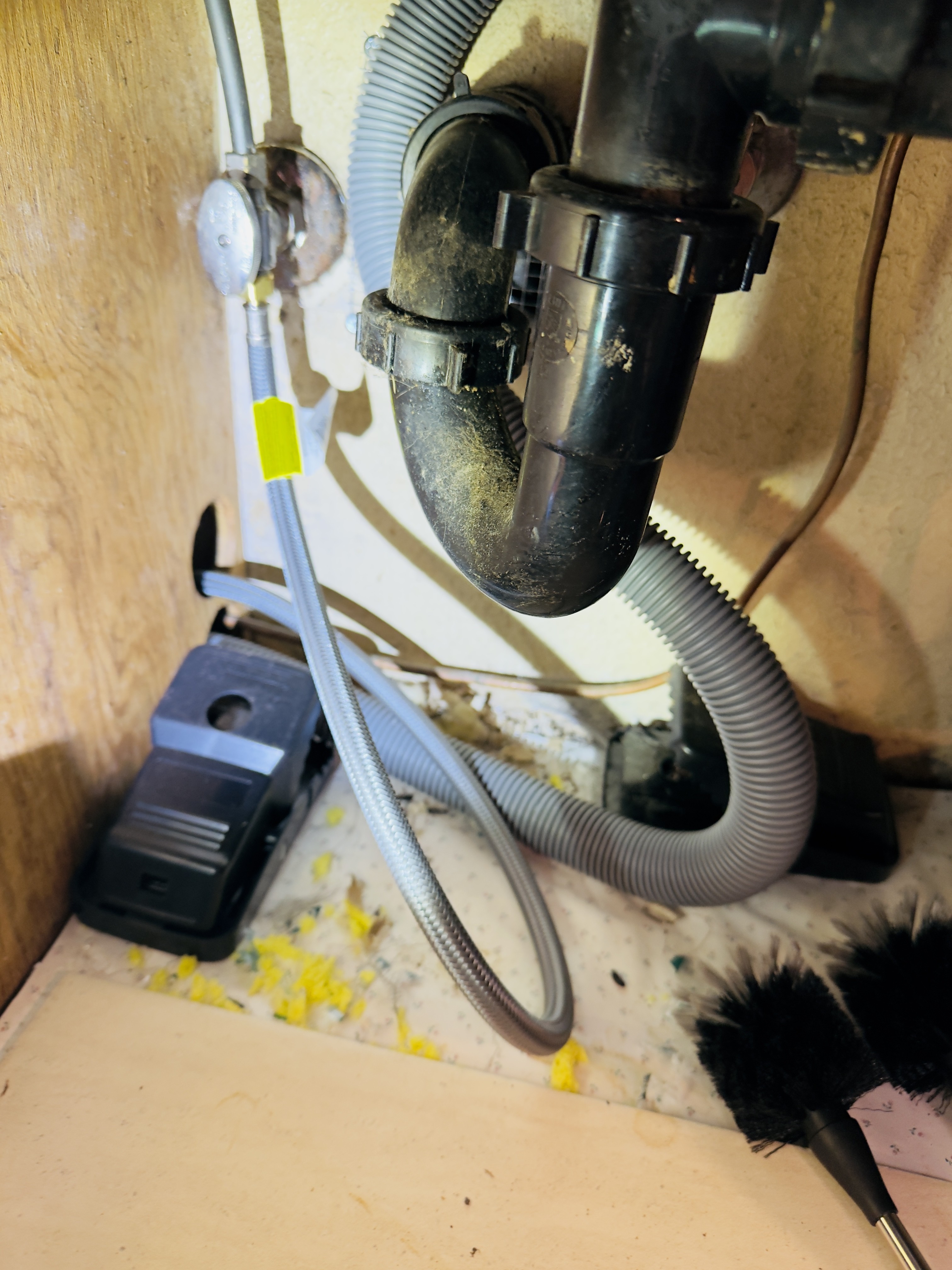
Think of it this way: sealing the opening deals with the way in. The traps deal with anything that may already have come in. Doing only one of those can leave part of the problem in place.
That’s also why we don’t recommend filling every hole you find right away. Sealing without a plan for an animal that might still be inside can leave it trapped in the house, looking for another way out.
Why We Also Placed Bait Stations Outside
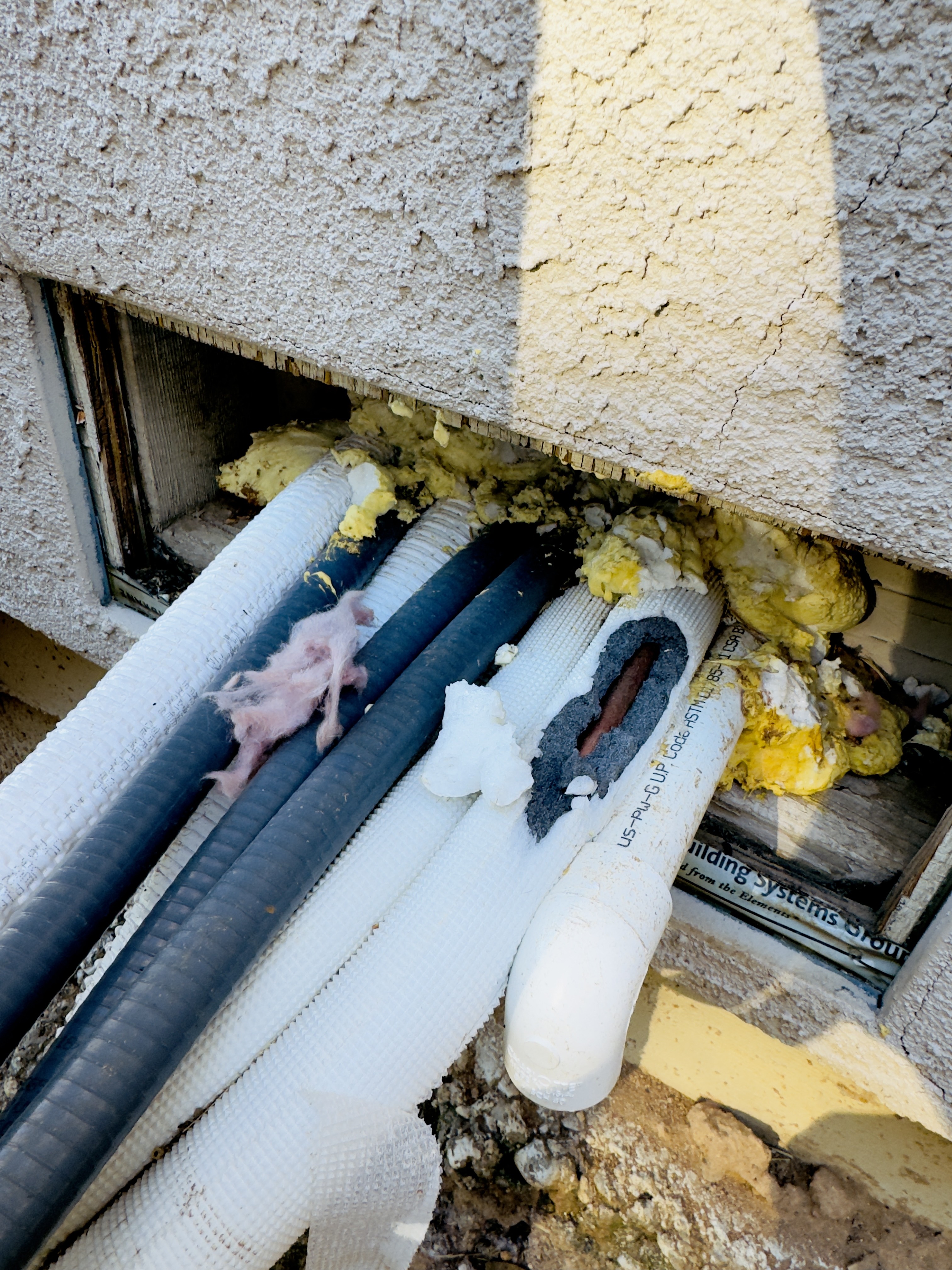
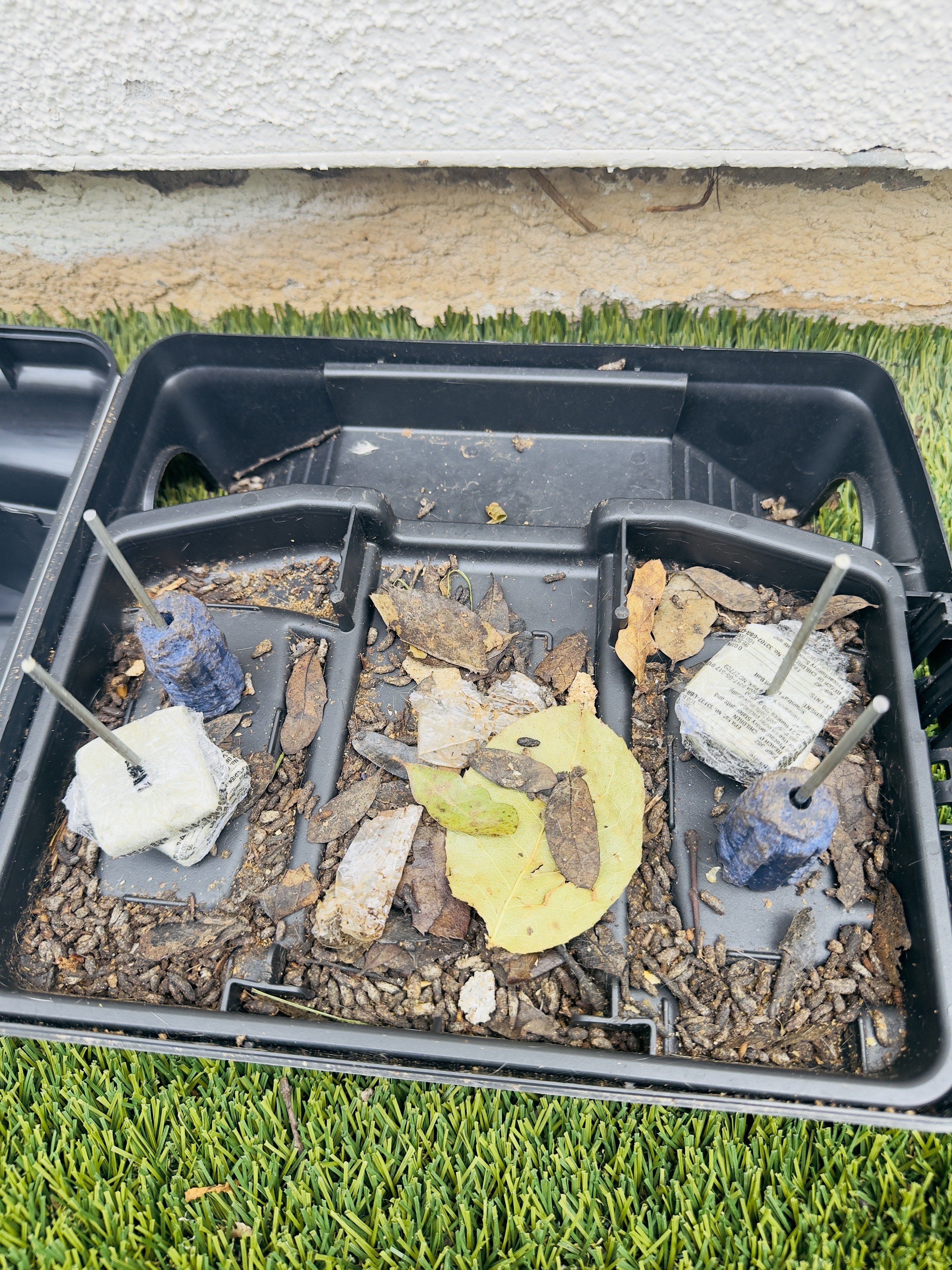
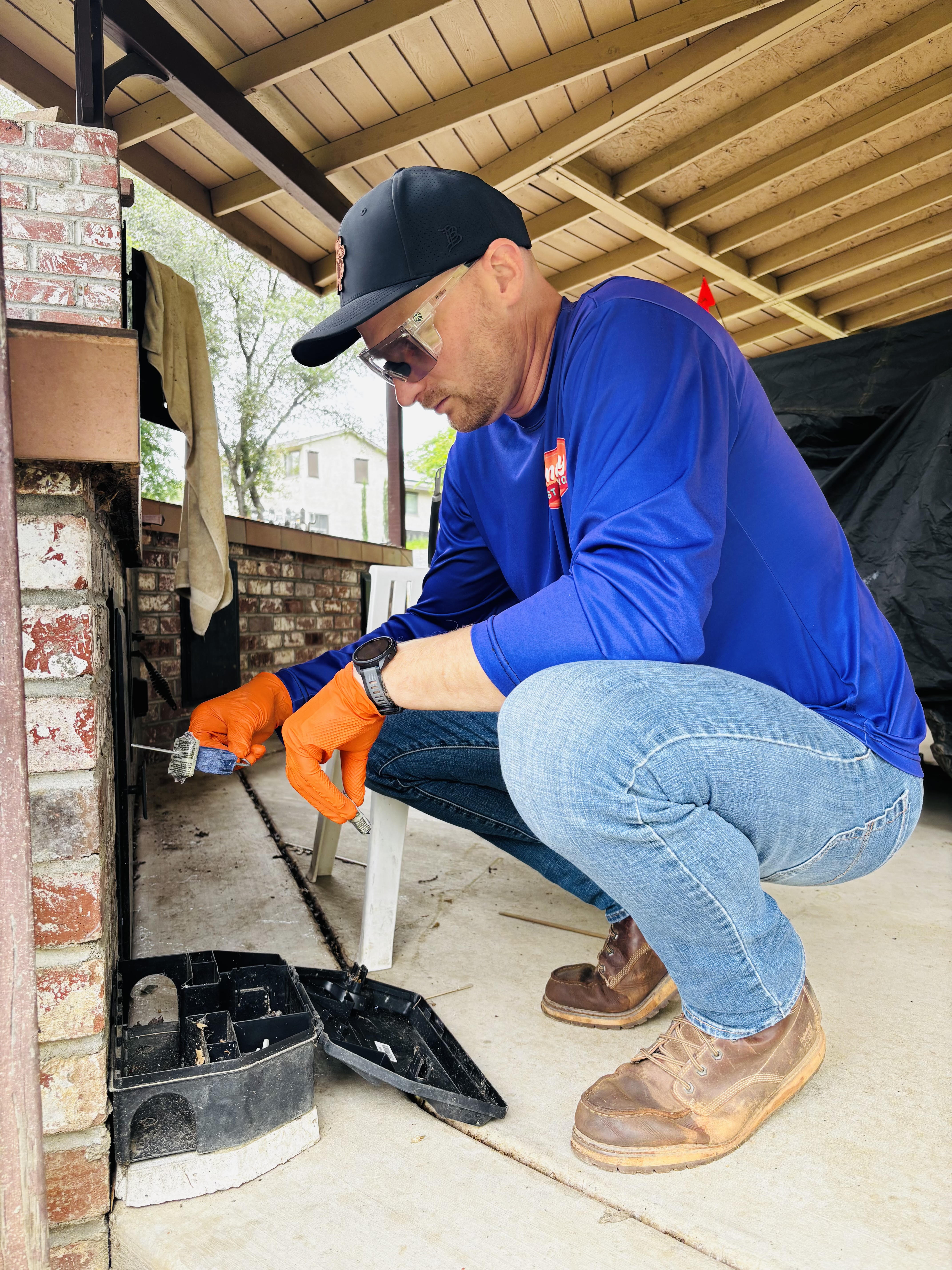
We placed two exterior bait stations around the outside of the home. Their locations were chosen based on the exterior evidence and activity we’d found.
The goal was to help reduce rodent activity and population pressure outside, around the structure. Bait stations aren’t automatic for us, and they aren’t a replacement for finding and correcting openings. Here, the outdoor evidence made them a reasonable part of the plan. If you have questions about bait and pets or wildlife, we cover that in our article on whether rodent bait hurts wildlife.
Is the Opening Under the Sink the Only Way In?
We can’t say that, and we wouldn’t want to. Finding and correcting one opening is real progress, but it doesn’t prove it was the only one. Rats and mice can use more than one route, and some openings are hard to see.
That’s why the next step is watching what happens. After a job like this, the things worth paying attention to include whether the traps catch anything, whether the bait stations show activity, whether new droppings or other signs turn up inside, and whether the corrected opening holds. If new evidence appears, that’s another clue to follow. For a broader look at how inspection, trapping, bait stations, and exclusion fit together over time, see how we handle rats and mice in Placer County.
When Should You Call a Professional?
A single old dropping in a garage corner might be worth cleaning up safely and watching. It’s probably time to bring someone in if you’re seeing:
- Droppings in more than one area, or showing up again after you’ve cleaned
- Evidence in the kitchen, pantry, closets, or living space
- Sounds in walls, ceilings, or under floors
- Damage around pipes, vents, or other openings
- Activity coming back after something was already sealed
If you’ve found signs of rats or mice and want help figuring out what’s going on, our rodent control service starts with an inspection and builds the plan around what we actually find. This example came from a home in Meadow Vista, but we follow the same process when we’re called about rats or mice in Auburn, Lincoln, and communities throughout Placer County. You can reach us at (916) 625-6741.


.jpg)









.jpeg)